
World Hydrogen Day 2025: A Look at State of the Hydrogen Economy

The hydrogen economy is no longer a distant dream, it’s unfolding right now. Across the globe, hydrogen is shifting from pilot projects to large-scale commercial deployment. Governments, investors, and innovators are rallying around this clean, versatile energy carrier, setting the stage for a new industrial revolution powered by hydrogen.
Over the past decade, hydrogen has evolved from a niche concept into a cornerstone of the clean energy transition. More than $600 billion has already been committed worldwide, as every major economy races to establish its foothold in the fast-growing green hydrogen market.
Europe continues to lead with major electrolyzer installations and hydrogen import corridors. The Middle East is leveraging its abundant solar and wind resources to become a global exporter of renewable hydrogen, and Asia-Pacific nations like Japan and South Korea are rapidly expanding hydrogen use in both power generation and mobility.
Although grey hydrogen—produced from natural gas—still dominates supply, the momentum is shifting toward green (renewable-powered) and blue (carbon-captured) hydrogen. Electrolyzer costs have dropped nearly 70 percent since 2015, making hydrogen more competitive with fossil fuels and bringing net-zero energy goals within reach.
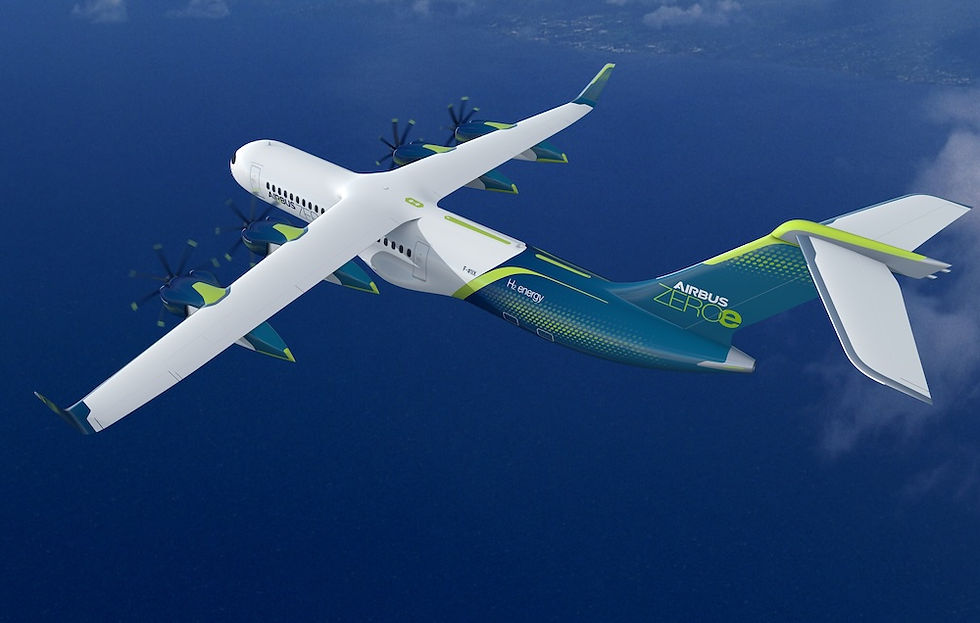
At the same time, hydrogen mobility is accelerating. Trucks, buses, trains, and even aircraft are starting to run on hydrogen fuel cells. Aviation and shipping prototypes hint at a future of long-distance, zero-emission transport. Beyond transport, hydrogen is entering the power and data-center sectors as a clean, resilient backup energy source—improving grid stability and reducing carbon emissions. These developments mark the start of a more balanced and diversified hydrogen energy ecosystem.

Like every major technology before it, hydrogen follows an adoption curve that moves from innovation to full-scale integration as costs drop and infrastructure matures:
Stage 1: Research & Demonstration (2000–2020) – Early R&D and pilot projects proved feasibility.
Stage 2: Early Commercialization (2020–2025) – Government incentives, hydrogen hubs, and first industrial deployments.
Stage 3: Growth Acceleration (2025–2030) – Scaling production, expanding supply chains, and developing trading infrastructure.
Stage 4: Mass Adoption (2030–2040) – Achieving cost parity with fossil fuels and broad industry integration.
Stage 5: Market Maturity (2040+) – Full global adoption across power, transport, and industrial sectors.
Right now, we’re firmly in Stage 3: Growth Acceleration—a pivotal phase where early success stories are transforming into scalable, repeatable business models. The next five years will determine how quickly hydrogen achieves global market maturity. Hydrogen today is where solar and wind were in the early 2010s—poised for exponential growth. If current trends continue, green hydrogen could reach cost parity with fossil fuels by 2030, unlocking new opportunities for clean industrial production, energy independence, and climate resilience.
As World Hydrogen Day 2025 reminds us, global cooperation is key. With stronger certification standards, advanced trading platforms, and unified policy frameworks, hydrogen is evolving into more than just a fuel—it’s becoming the energy currency of the future. The hydrogen revolution is already underway. The question isn’t if hydrogen will transform the energy landscape, but how fast. Nations and companies that invest now won’t just lead the market—they’ll define the next era of global energy.


Comments