
Israel's Negev Hydrogen Valley Tackles the Industry's $100 Billion Chicken-and-Egg Problem

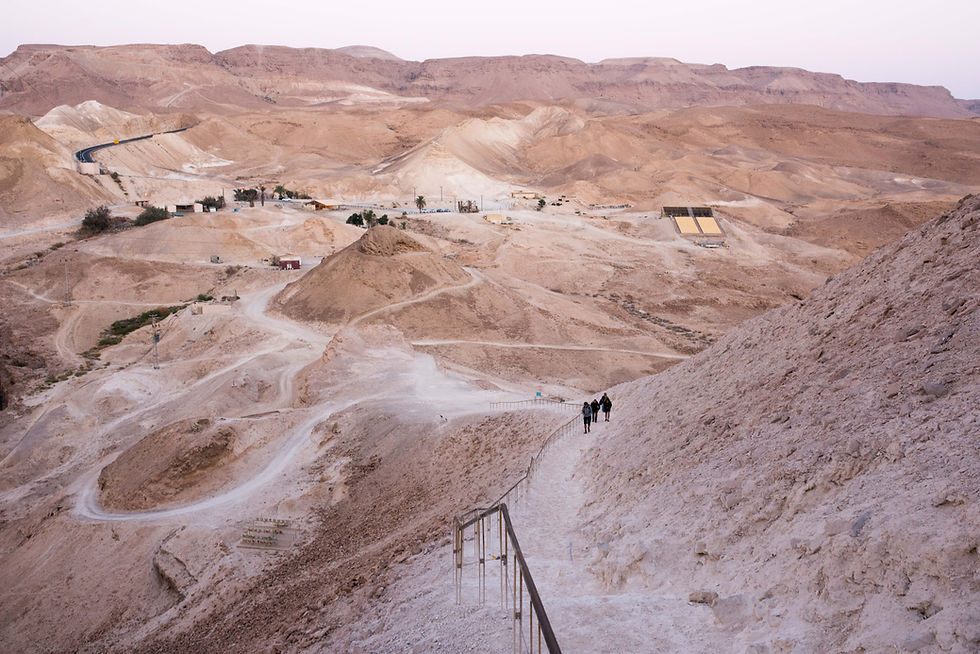
Desert testbed launching in 2026 will integrate production, storage, and refueling to address hydrogen's chicken-and-egg deployment challenge.
Israel's Ministry of Energy and Infrastructure announced plans this week to establish a comprehensive hydrogen innovation valley in the eastern Negev desert, investing over 40 million shekels (approximately $12 million) in what could become a crucial proving ground for the global hydrogen economy. The project, set to launch in 2026, distinguishes itself from typical hydrogen pilots by testing the entire value chain in one integrated location rather than isolated technologies.
The Negev hydrogen valley will include a hydrogen refueling station, pyrolysis-based production systems, hydrogen-powered generators, and various storage and transport technologies. This holistic approach directly tackles hydrogen's fundamental deployment problem: the industry cannot scale without simultaneous development of production, infrastructure, and end-use applications. Individual pilot projects have proven specific technologies work, but the critical question of how these elements integrate operationally remains largely unanswered.
The inclusion of pyrolysis technology represents a particularly strategic choice. This process produces hydrogen through high-temperature material breakdown while capturing solid carbon rather than releasing CO2, positioning it as a potential middle path between expensive green hydrogen from electrolysis and high-emission gray hydrogen from natural gas. If successfully demonstrated at scale in the Negev, pyrolysis could emerge as a viable "turquoise hydrogen" pathway that balances cost and emissions concerns.
The eastern Negev location offers strategic advantages beyond available land. The region provides world-class solar irradiation for renewable energy generation, geographic positioning for potential Mediterranean and Red Sea hydrogen export corridors, and alignment with Israel's long-standing economic development goals for its southern territories. More importantly, the space allows for testing how hydrogen moves between production, storage, and consumption without the constraints of retrofitting existing industrial infrastructure.
For the broader hydrogen industry approaching a critical scaling inflection point, the Negev project's integrated testing model could provide operational data and cost validation that pure laboratory research cannot deliver. While a $12 million investment is modest compared to multi-billion dollar hydrogen hubs planned elsewhere, its focus on proving how the pieces fit together may offer higher-value insights for policymakers and investors deciding where to commit larger capital. The Middle East has predominantly pursued blue hydrogen from natural gas with carbon capture, making Israel's green and turquoise hydrogen focus a potential diversification of regional approaches as European clean hydrogen demand accelerates.
Whether the Negev hydrogen valley succeeds in demonstrating economically viable integrated operations will help determine if hydrogen moves beyond its decades-long status as the perpetual fuel of the future. For an industry struggling to bridge the gap between technological promise and commercial practice, real-world proof that the full value chain functions together could matter far more than the project's headline budget suggests.


Comments